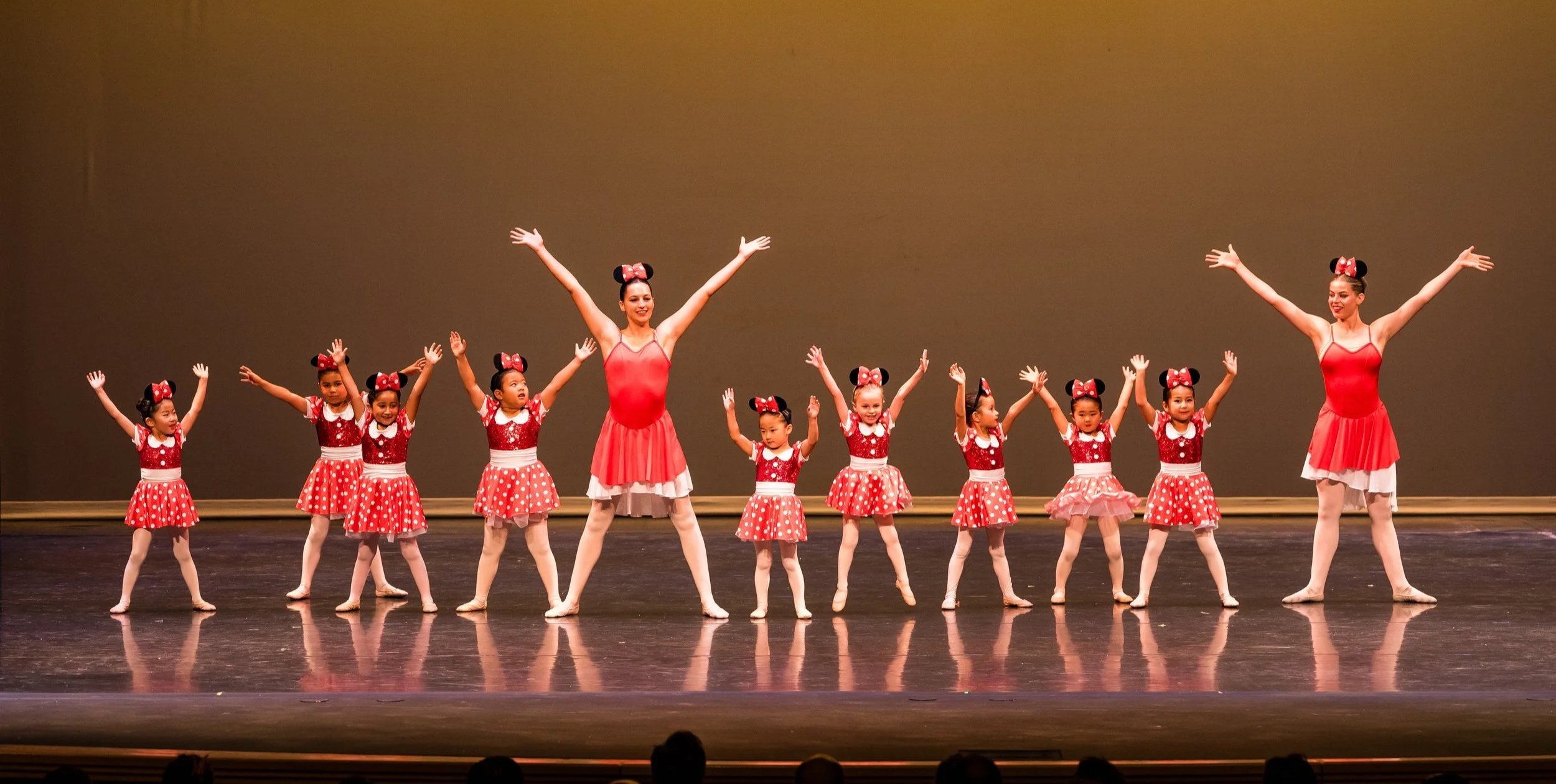
Dancers in the 2024 Academy Recital, A Night at the Movies
Key Takeaways
Builds academic skills: Dance strengthens focus, memory, discipline, and time management.
Boosts confidence and resilience: Performing and working through challenging movements teaches persistence and self-confidence.
Encourages creativity and collaboration: Students develop problem-solving, communication, and teamwork skills.
Strengthens college applications: Long-term dance involvement demonstrates commitment, initiative, passion, and leadership.
Creates a compelling personal story: Dance experiences can give students meaningful material for college essays and help admissions officers understand how ballet has shaped their achievements and college readiness.
Dance is often viewed primarily as an artistic or athletic pursuit, but its benefits can extend well beyond the studio. Regular ballet and dance training can help students develop concentration, discipline, creativity, collaboration, and resilience — highly transferable skills that support both short-term academic achievement and long-term educational goals.
Why Is Ballet Important for General Academic Success?
Here are some of the academic benefits of ballet your child will gain in grade school.
Builds Focus, Memory, and Learning Skills
Ballet requires students to listen carefully, memorize choreography, follow sequences, coordinate movements, and stay attentive to music and timing. These demands can strengthen focus and memory, skills that are useful when students are learning classroom material.
Broader research points to similar mental benefits of ballet and other performing arts. The National Endowment for the Arts reports that, from kindergarten through fifth grade, participation in out-of-school arts activities was positively associated with several social-emotional and academic outcomes. Arts classes outside school were also positively linked with reading, math, and science scores at each grade level, although some relationships became inconsistent after researchers accounted for demographic and family characteristics.
Develops Discipline, Confidence, and Resilience
Dance training also teaches students how to work toward long-term goals. Repeating difficult movements, preparing for performances, and responding to corrections require persistence and self-discipline. Those habits can transfer to challenging assignments and exams.
Performing can build confidence as well. Performance opportunities help students manage nerves, develop agency, and see themselves as capable contributors. Dance and other performing arts also encourage collaboration, communication, problem-solving, and the ability to accept constructive feedback.
Encourages Creativity and Engagement
Performing arts education can give students out-of-the-box strategies for approaching challenges and expressing ideas. Ballet and dance participation cultivate creativity and analytical skills, which enhance academic performance by helping students look at a given subject or problem through a variety of lenses.
How Dance Can Strengthen a College Application
Demonstrates Commitment and Initiative
For college applicants, dance can demonstrate far more than an extracurricular activity listed on a form or resume. Sustained participation shows that a student has invested significant time, energy, and passion in a discipline outside required academics. Meaningful extracurricular involvement can help applicants stand out, particularly when they’re able to showcase their passion, drive, and initiative.
Importantly, applicants do not have to be professional-level or competitive dancers. Classical ballet, jazz, tap, lyrical dance, school teams, performances, lessons, and other forms of sustained participation can count. What matters is the student's level of involvement, consistency, time commitment, and cultivated skill sets.
Becomes a Compelling Personal Development Story
Dance can also provide distinctive material for college essays. Even students who do not intend to major in dance can use their experiences to demonstrate qualities such as perseverance, leadership, communication, collaboration, creativity, and problem-solving. The key is to explain how dance shaped the student rather than simply describing accomplishments.
Dance can further demonstrate leadership and community involvement through teaching younger students, organizing performances, or starting a dance club. These experiences show initiative while connecting an individual passion to service and leadership.
Discipline, teamwork, time management, emotional expression, cultural awareness, and a diverse skill set are qualities dance can help students develop in abundance — and qualities that can put their college applications at the top of the stack.
The Bigger Picture
Ultimately, ballet and dance can contribute to academic success not because dancing automatically produces higher grades, but because sustained training gives students opportunities to practice the habits successful students need: focus, persistence, time management, creativity, confidence, collaboration, and goal-setting. When those experiences continue through high school, they can also give college applicants an authentic and memorable story about who they are and what they can contribute.
Boost Your Child’s Success With Southern California Ballet
Southern California Ballet (SCB) is a world-class dance facility in San Diego that trains dancers for a professional career, empowers people for a life of success, and welcomes the community to be part of an extraordinary experience. Our mission is to empower aspiring dancers to reach their full potential and elevate the community through inclusive, supportive educational programs and imaginative performances.
SCB’s training philosophy has been carefully honed by its artistic directors with the goal of providing effective, healthy, and foundational ballet training. We offer classes for people of all ages (4 years old and up). Learn more about our classes and levels, and reach out to join our academy today!