How to Create the Perfect Ballet Bun
Key Takeaways
A ballet bun starts with a smooth, secure ponytail.
Hairpins, bobby pins, and a hair net help keep the bun performance-ready.
Short hair can be secured with extra pins, gel, and a hair net.
Long or thick hair may need to be divided into sections for a flatter, more secure bun.
How to Do a Ballet Bun: The Basics
A ballet bun is one of the most recognizable parts of a dancer's appearance. Beyond creating a polished look, it keeps hair off the face and neck so dancers can focus on technique and performance. It’s also an important part of the standard ballet class uniform.
It may look simple, but creating one that stays neat through an entire class, rehearsal, or performance takes a little practice. Whether you're working with short, long, thick, or fine hair, a few simple techniques can help you achieve the polished look dancers are known for. Here's how to create a secure ballet bun that will hold up from the first plié to the final bow.
Before you begin, gather your essential ballet bun supplies:
Hairbrush or comb
Hair elastic
Hairpins or bobby pins
Hair net
Hairspray, gel, or styling cream
Optional bun form or donut
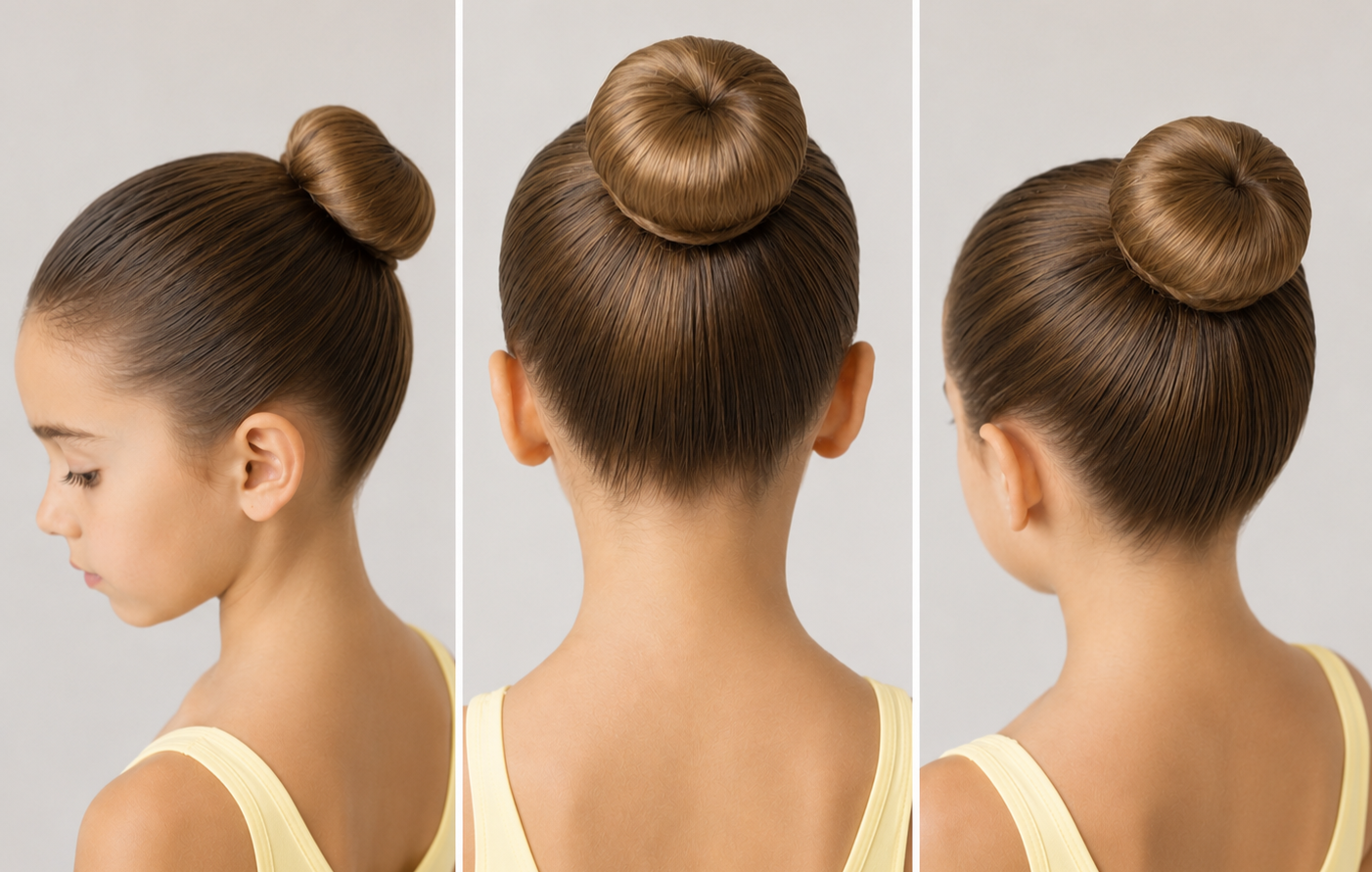
Start by brushing the hair thoroughly to remove tangles. Decide where the bun should sit. Most ballet schools prefer a high ballet bun (positioned at the crown of the head) or one at the middle-back portion of the head, though placement may vary according to age, performance requirements, or instructor preference.
Smooth the hair into a tight ponytail and secure it with an elastic. Apply a small amount of gel, styling cream, or hairspray as needed to tame flyaways.
Next, twist the ponytail and wrap it around the base of the elastic to form a bun. Secure the bun with hairpins as you work your way around the circle. Once the bun feels stable, place a hair net over it and add additional pins to keep everything in place. Finish with a light mist of hairspray for extra hold.
The goal is a bun that looks neat, flat against the head, and secure enough to stay in place throughout any amount, length, or type of movement.
How to Do a Ballet Bun With Short Hair
Short hair can be more challenging to contain, but it is still possible to create a polished ballet bun with the right techniques.
Begin by gathering as much hair as possible into a ponytail. If the front or sides are too short to reach the elastic, use gel or hairspray and secure loose sections with bobby pins.
Once the ponytail is secured, twist and wrap the available hair into a small bun. Don't worry if the bun is smaller than a traditional ballet bun. The priority is keeping the hair controlled and tidy.
A hair net can be especially helpful for dancers with short hair. Place the net over the bun and pin it securely. Then use additional bobby pins to anchor any loose pieces around the head.
For very short layers that won't stay in the bun, try pinning them flat against the head before applying hairspray. Some dancers also use multiple small pins around the hairline to keep shorter strands from escaping during movement.
How to Use a Ballet Bun Donut
A ballet bun donut can make it easier to create a fuller-looking bun, especially for dancers with fine or shorter hair.
Start by pulling your hair into a ponytail and threading it through the center of the donut. Spread the hair evenly around the donut so it completely covers the form, then secure it with a second hair elastic.
Use bobby pins around the edges of the bun to anchor the donut close to your head and keep it from shifting during class or performance. Finish with a hair net and hairspray for a smooth, secure hold.
With enough pins, product, and patience, even relatively short hair can achieve a performance-ready ballet look.
How to Make a Ballet Bun With Long Hair (Or Thick Hair)
Making a ballet bun for thick hair or long hair often requires a slightly different approach because a simple twist can create a bulky bun that sticks out from the head.
Start by securing the hair in a strong ponytail. Instead of twisting the entire ponytail into one large rope, divide it into two sections. Twist each section separately and wrap them around the base of the ponytail one at a time. This technique helps distribute the hair more evenly and creates a flatter bun.
Another option is to braid the ponytail before wrapping it around the elastic. Braided buns often feel more secure and can be easier to manage for dancers with very long hair.
As you wrap the hair, insert pins frequently rather than waiting until the end. Long or thick hair carries more weight, so consistent pinning helps prevent the bun from loosening during class or performance.
Once the bun is formed, cover it with a hair net and secure it with additional pins. Finish with hairspray to smooth flyaways and keep the style looking polished.
For dancers with especially thick hair, using two hair elastics, extra-large hairpins, or multiple hair nets can provide additional support. The finished bun should feel secure, balanced, and comfortable enough to withstand jumps, turns, and hours of rehearsal.
Be Ready for Anything With Southern California Ballet
Southern California Ballet (SCB) is a world-class dance facility in San Diego that trains dancers for a professional career, empowers people for a life of success, and welcomes the community to be part of an extraordinary experience. Our mission is to empower aspiring dancers to reach their full potential and elevate the community through inclusive, supportive educational programs and imaginative performances.
SCB’s training philosophy has been carefully honed by its artistic directors with the goal of providing effective, healthy, and foundational ballet training. We offer classes for people of all ages (4 years old and up). Learn more about our classes and levels, and reach out to join our academy today!